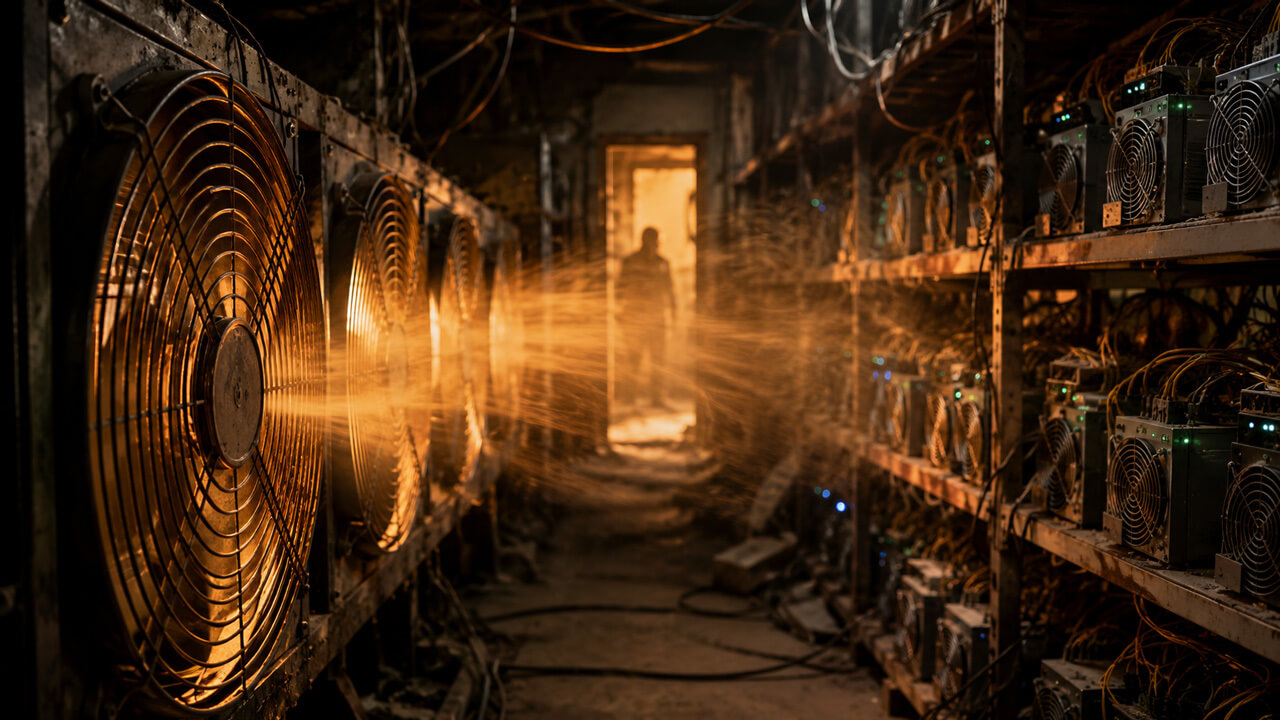
In a shocking turn of events, a recent raid by the Rio de Janeiro Civil Police has uncovered a new and innovative crypto-crime model, one that involves turning stolen power into digital money. According to a report by CryptoSlate, published on their website, the operation targeted a Comando Vermelho operational nucleus, a notorious gang in Brazil, and found a crypto mining setup with roughly 30 computers arranged on shelves in a room on an apparently abandoned lot. The setup drew power from a clandestine electrical connection running directly from a utility pole, a clear indication of the gang's intentions to avoid detection.
As we've seen in the past, crypto mining can be a lucrative business, but it requires a significant amount of power to operate. So, what does this mean for retail traders and the crypto market as a whole? Is this the turning point where we start to see a new wave of crypto-crime models emerge? The picture emerging is one of increased sophistication and creativity among criminal organizations, who are now turning to crypto as a means to launder their illicit gains.
Crypto Mining and the Rise of Crypto-Crime
Sources familiar with the matter indicate that the use of stolen power to mine cryptocurrency is a new and concerning trend. The fact that these gangs are able to set up complex mining operations, complete with high-capacity fans and sophisticated computer equipment, signals a level of organization and planning that is alarming. In a telling sign of the times, the use of crypto mining as a means to launder money is becoming increasingly popular among criminal organizations, who see it as a way to turn their illicit gains into clean, digital cash.
As things stand, the use of crypto mining to launder money is a relatively new phenomenon, but one that is gaining traction. With the rise of cryptocurrency, we've seen a corresponding increase in crypto-related crime, from phishing scams to exchange hacks. But the use of stolen power to mine cryptocurrency takes this to a whole new level, and raises important questions about the role of law enforcement in regulating the crypto space. What we're watching now is a cat-and-mouse game between law enforcement and criminal organizations, with the latter constantly evolving and adapting to stay one step ahead of the law.
The Economics of Crypto Mining
So, how do these crypto mining operations make money? The answer lies in the use of powerful computer equipment to solve complex mathematical equations, which are used to validate transactions on the blockchain. In return for their efforts, miners are rewarded with a certain amount of cryptocurrency, which can then be sold on the open market. But with the cost of power being a major factor in the profitability of crypto mining, the use of stolen power becomes an attractive option for those looking to maximize their gains. To calculate the potential profits of a crypto mining operation, users can utilize a crypto profit/loss calculator, which can help to determine the viability of such an operation.
However, the use of stolen power to mine cryptocurrency is not without its risks. For one, the risk of detection is high, and the consequences of getting caught can be severe. Additionally, the use of high-capacity fans and other equipment can be noisy and draw attention to the operation, making it more likely to be discovered. To mitigate these risks, miners can use a liquidation price calculator to determine the point at which their operation becomes unprofitable, and plan accordingly.
The use of stolen power to mine cryptocurrency is a wake-up call for law enforcement and regulators, who must now confront the reality of crypto-crime and its increasingly sophisticated methods.
In editorial opinion, the rise of crypto-crime models such as this one is a concerning trend that requires a concerted effort from law enforcement and regulators to combat. The fact that these gangs are able to operate with impunity, using stolen power to mine cryptocurrency and launder their illicit gains, is a sign of a broader problem that needs to be addressed. By utilizing the right tools, such as a crypto tax calculator, users can ensure that they are operating within the bounds of the law, and avoiding any potential pitfalls that may arise from crypto-related activities.
Conclusion and Implications
The discovery of this crypto mining operation in Rio de Janeiro is a significant development in the world of crypto-crime, and one that highlights the need for increased vigilance and cooperation between law enforcement and regulators. As we move forward, it will be important to monitor the situation and see how it develops, and to consider the implications of this new crypto-crime model for the broader crypto market.
Bottom Line
In conclusion, the use of stolen power to mine cryptocurrency is a new and concerning trend that requires a concerted effort from law enforcement and regulators to combat. As we've seen, the rise of crypto-crime models such as this one is a wake-up call for the crypto community, and a reminder of the need for increased vigilance and cooperation to prevent the misuse of cryptocurrency. By staying informed and utilizing the right tools, users can help to prevent the spread of crypto-crime and ensure that the crypto market remains a safe and secure place to operate.